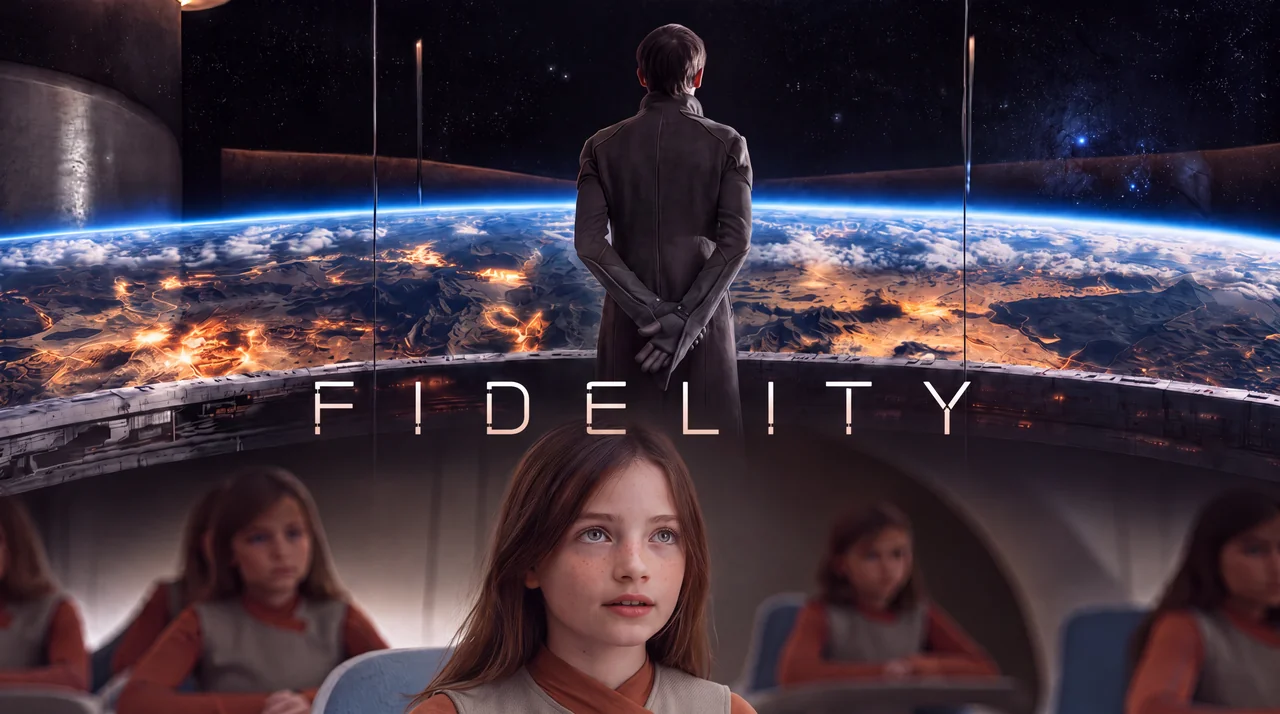
A life that can be restored.
In a distant future, humanity has moved beyond biological existence. Human consciousness persists across synthetic bodies, allowing physical damage and the loss of a body to be treated as recoverable events.
A system known as Persistence preserves the continuity of a person’s identity, memories, and relationships. Citizens trust that their data is protected in state-controlled facilities and that, if their bodies are destroyed, they can be embodied again at a Revision Center.
These people are not emotionless machines. They love, grieve, form attachments, and remember their lives. What their civilization has relinquished is the full continuity of biological experience.
On the performances
The restrained performances and emotional expressions that may feel unfamiliar by contemporary human standards are deliberate choices. These characters belong to a civilization in the distant future, generations removed from much of biological life. Their outward reserve reflects a humanity struggling to preserve its warmth and spontaneity within an increasingly regulated existence. They still feel deeply, even when those feelings do not surface in the ways we expect.

Fidelity is a technology developed to temporarily reconstruct that missing dimension. Through a Fidelity Bay, citizens can experience approximations of ancestral human sensations such as touch, smell, taste, temperature, visceral response, and other forms of embodied perception. These experiences are rare, computationally expensive, and strictly limited.
But Fidelity can only recreate an experience temporarily. A person may remember that an event happened, understand what it meant, and retain its emotional significance, yet the embodied sensation itself cannot be preserved and recalled in the way a biological nervous system once could.
Biological life does more than register experience. Every sensation, injury, hormonal response, metabolic change, and physical adaptation alters the body that will experience the next moment. The body carries a physical history of what it has lived through.
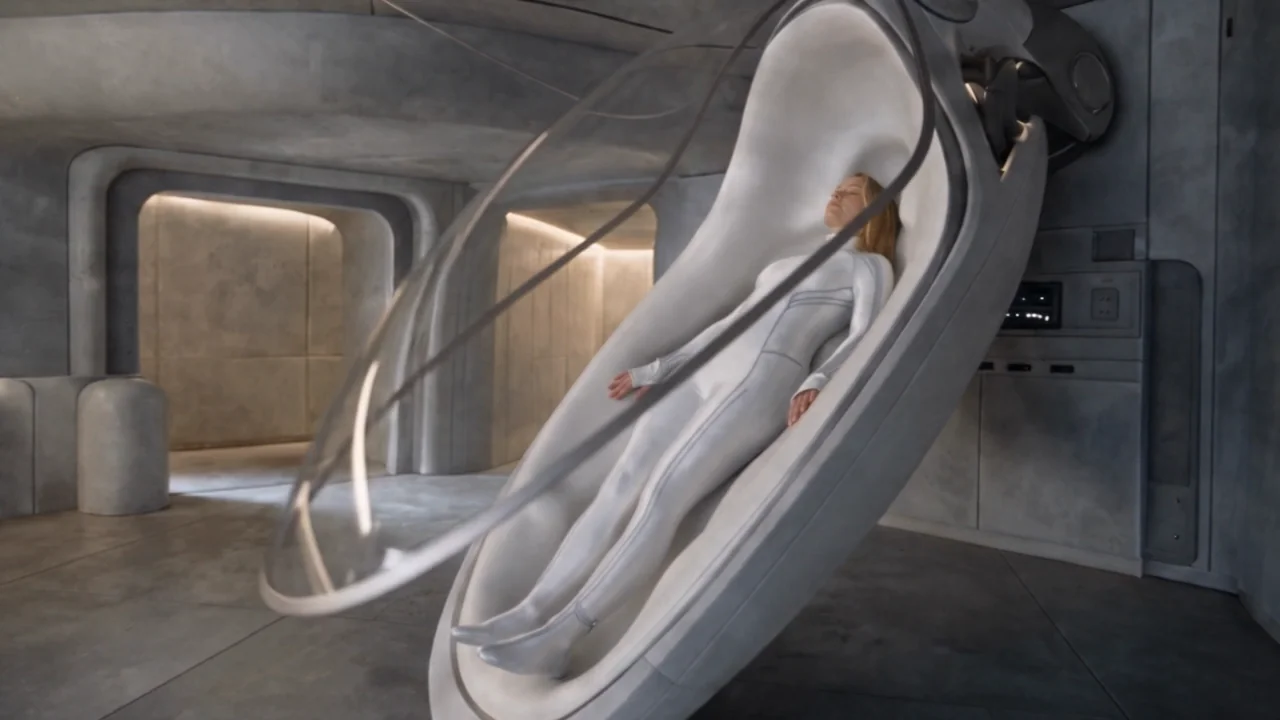
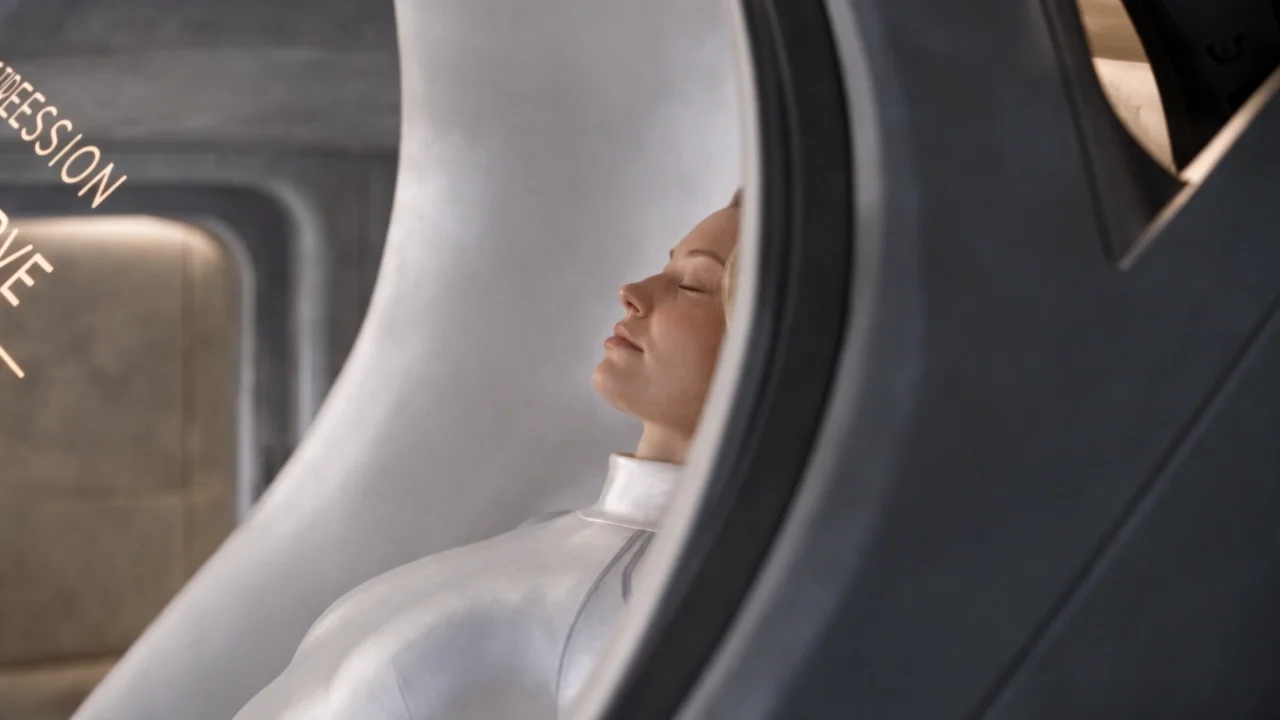
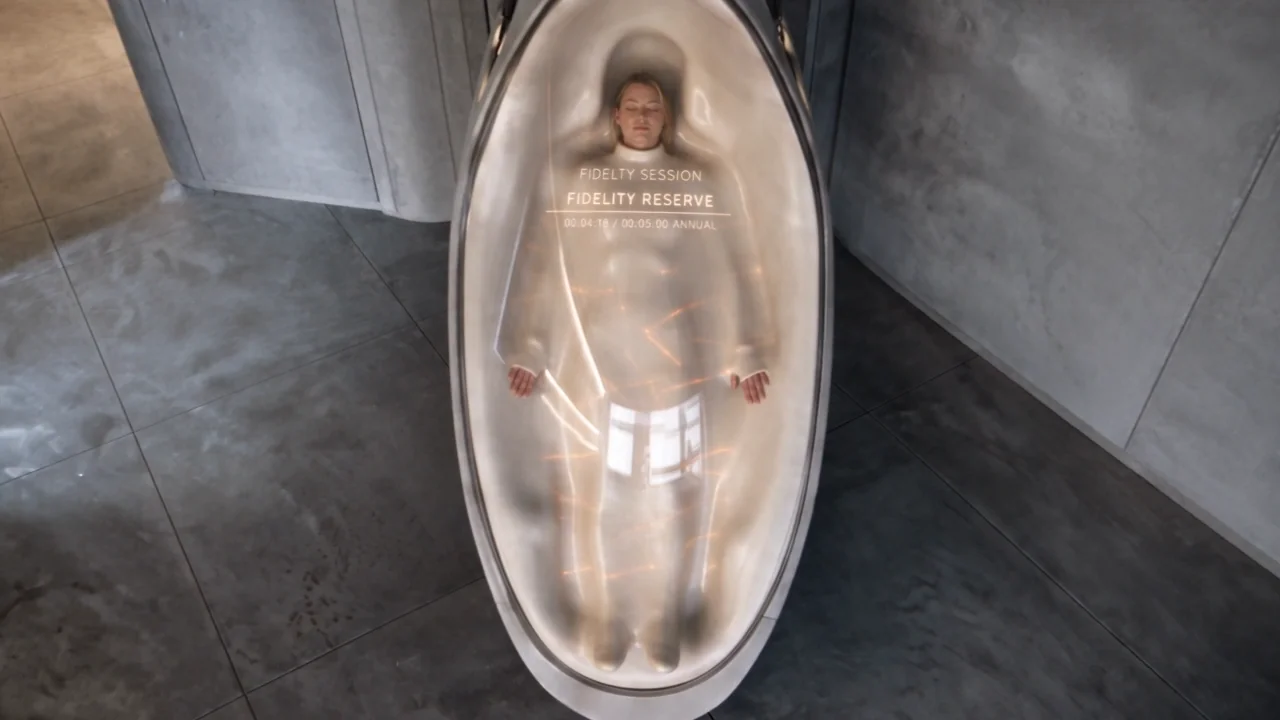
Lennie Calder, a scientist at the Ancestral Fidelity Center, has become increasingly obsessed with this distinction. To her, something essential has been lost in a civilization that can preserve consciousness while continually restoring the body to controlled states. Her interest in preserving somatic memory beyond an active Fidelity session brings her into conflict with the limits imposed on her research.
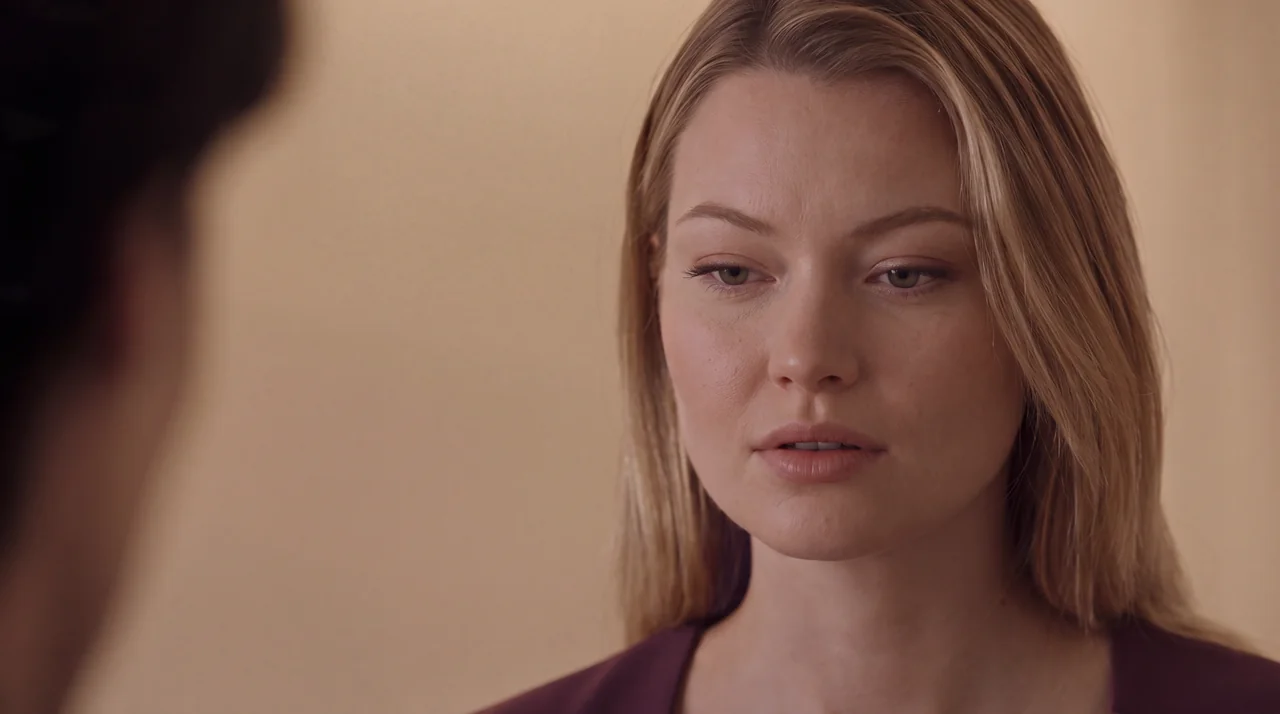
When Lennie and her husband Noah are told that they must wait another eighty-seven years before their next Family Expansion eligibility review, the problem becomes personal. But the waiting period is not Lennie’s true concern. She does not simply want a child assigned a conventional synthetic body. She wants to create a biological human being, someone capable of growing, healing, aging, changing, and carrying the physical consequences of experience forward through life.

With the help of her friend and colleague Simone Bennett, Lennie obtains an unauthorized Family Expansion override. In exchange, she offers Simone access to an advanced Convergence run, an opportunity to experience the bodily presence of her lost spouse again. While Simone is immersed in the session, Lennie exploits her active authorization to enter the Origin-Level Archive and obtain ancestral biological material. She uses it to create Iris in a private laboratory.
Noah does not know the full truth. He believes Lennie, with Simone’s help, has illegally bypassed the Family Expansion waiting period. He does not know that their daughter possesses a biological body. Lennie deliberately keeps him outside the most dangerous parts of what she is doing. That secrecy is an attempt to protect him, but it also denies him the opportunity to fully understand and consent to the choices shaping their family.
Seven years later, Iris can taste a strawberry and remember how it compares with one from the previous summer. She does not need Fidelity to feel an injury, heal from it, or remember how an experience felt. Each experience becomes part of the physical history of the person she is becoming.
A minor accident in the botanical garden exposes a biological trace. Lennie’s refusal of the Care Unit’s diagnostic intervention attracts scrutiny, and the trace begins a chain of investigation that Iris’s registered identity cannot explain.
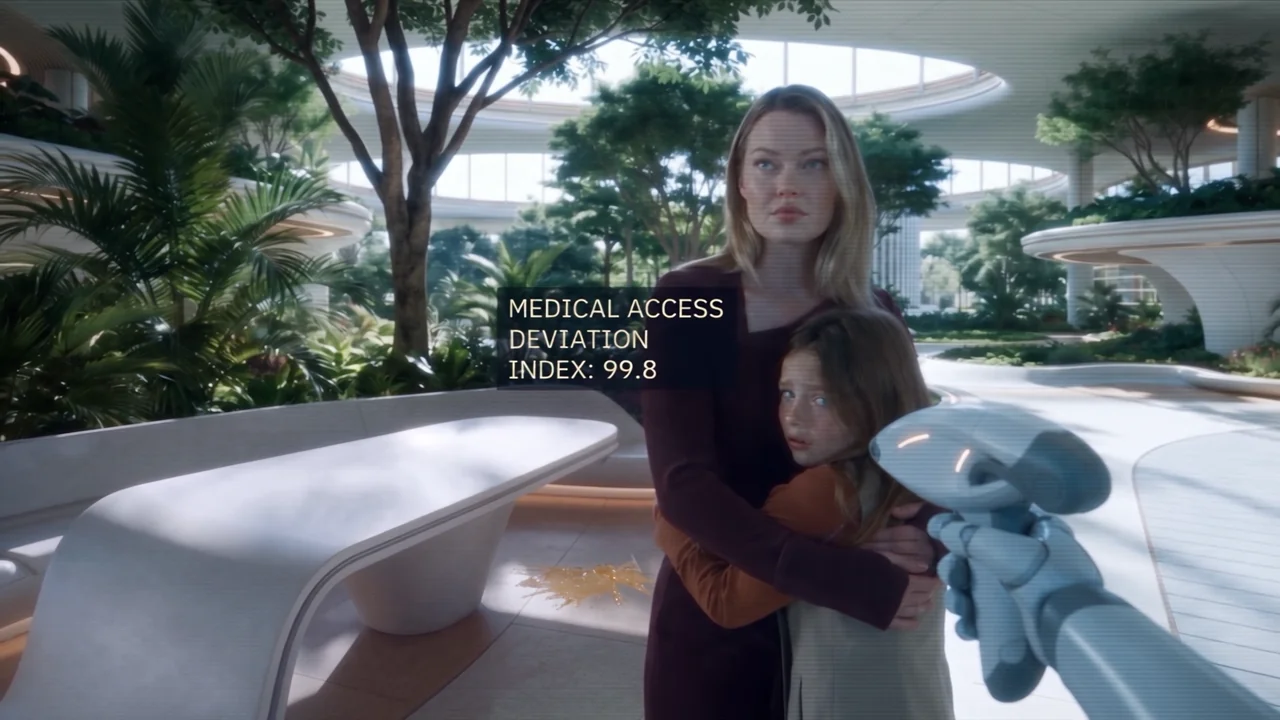
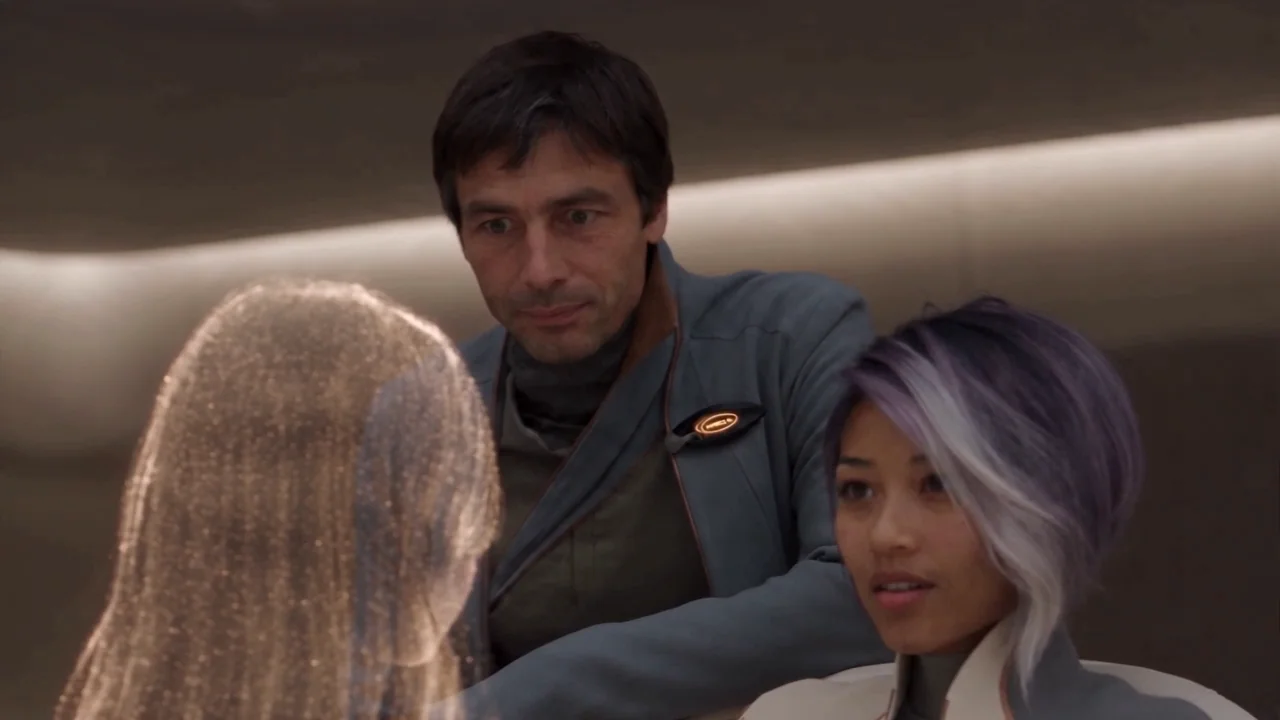
At the Civic System Review Center, Rei and Patrick encounter inconsistencies in Iris’s record and the evidence surrounding the biological sample. They do not yet know with certainty what Iris is. But what initially appears to be a bureaucratic irregularity points toward something far more dangerous: she did not enter the world through the registered process at all.
Noah helps his family escape and loses his synthetic body. His subsequent restoration demonstrates what Persistence ordinarily promises: the destruction of a body need not end a person’s life.
After Lennie and Iris are captured, a deeper examination confirms what the records cannot accommodate. Iris has an organic metabolism and a biological human body. Confronted with what she has created, Lennie’s answer is simple: “Us.”
A shared reality.
Convergence is an experimental extension of Fidelity, still under development at the Ancestral Fidelity Center.
Its computational demands far exceed those of a standard Fidelity Bay. When Lennie describes a single run as consuming “half the quarter’s allocation,” she is referring to the extraordinary resources required for this research program.
Scheduled test runs take place only once every ten years. The two specialized pods at the center of the AFC form a paired system that allows two participants to simultaneously experience the same simulated reality, rather than separate individual reconstructions.
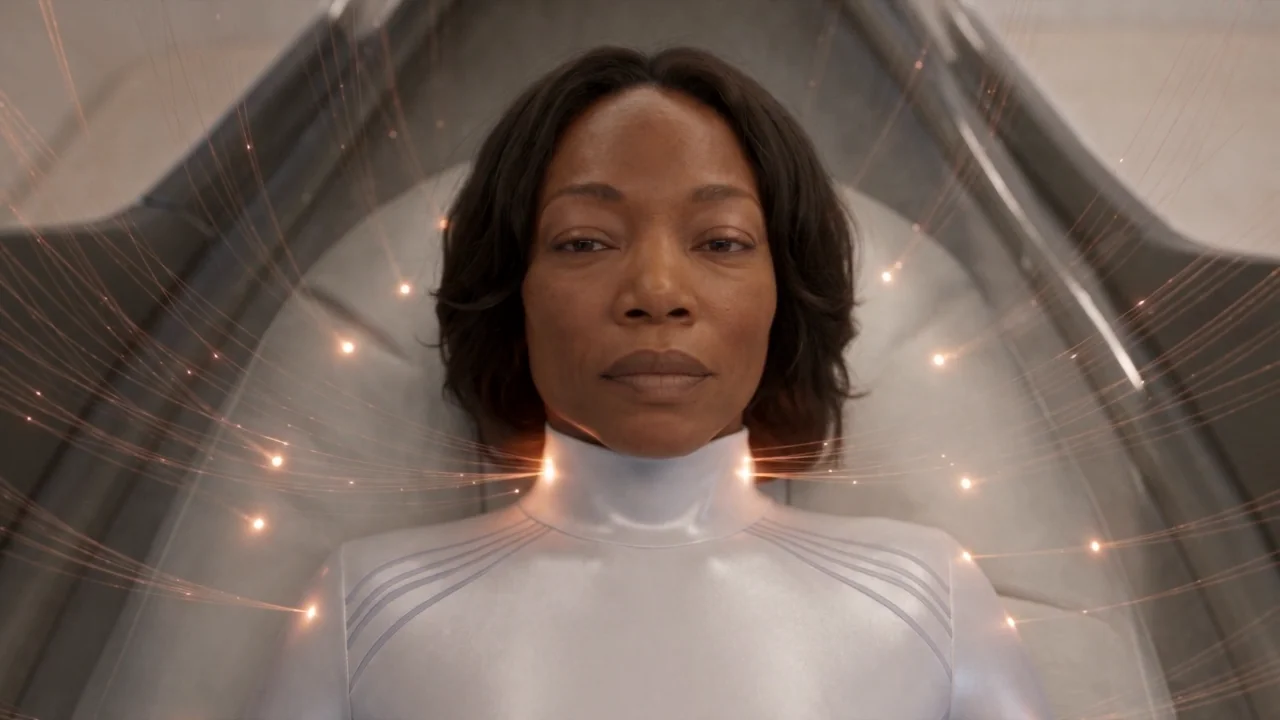
For Simone, access to Convergence carries a deeply personal meaning: the possibility of experiencing the bodily presence of her lost spouse again. Lennie offers her an unscheduled run in exchange for the Family Expansion override. Bringing the test forward commits an exceptional share of the Center’s computational budget and turns a tightly controlled research opportunity into a private bargain between two friends.
The idea that survived.
Mara Venn lived approximately fourteen centuries before the events of the film, during an early period of humanity’s existence in synthetic bodies and digital hosting.
She was one of the major scientific figures whose theories and discoveries laid the foundations of Fidelity. Her work emerged within an already post-biological civilization, rather than before its transition.
Venn questioned the state’s commitment to an interstellar future when that ambition treated biological existence and its possibilities as expendable. For her, the ability to grow, change, and carry the irreversible consequences of experience was not simply an obsolete limitation to be engineered away.
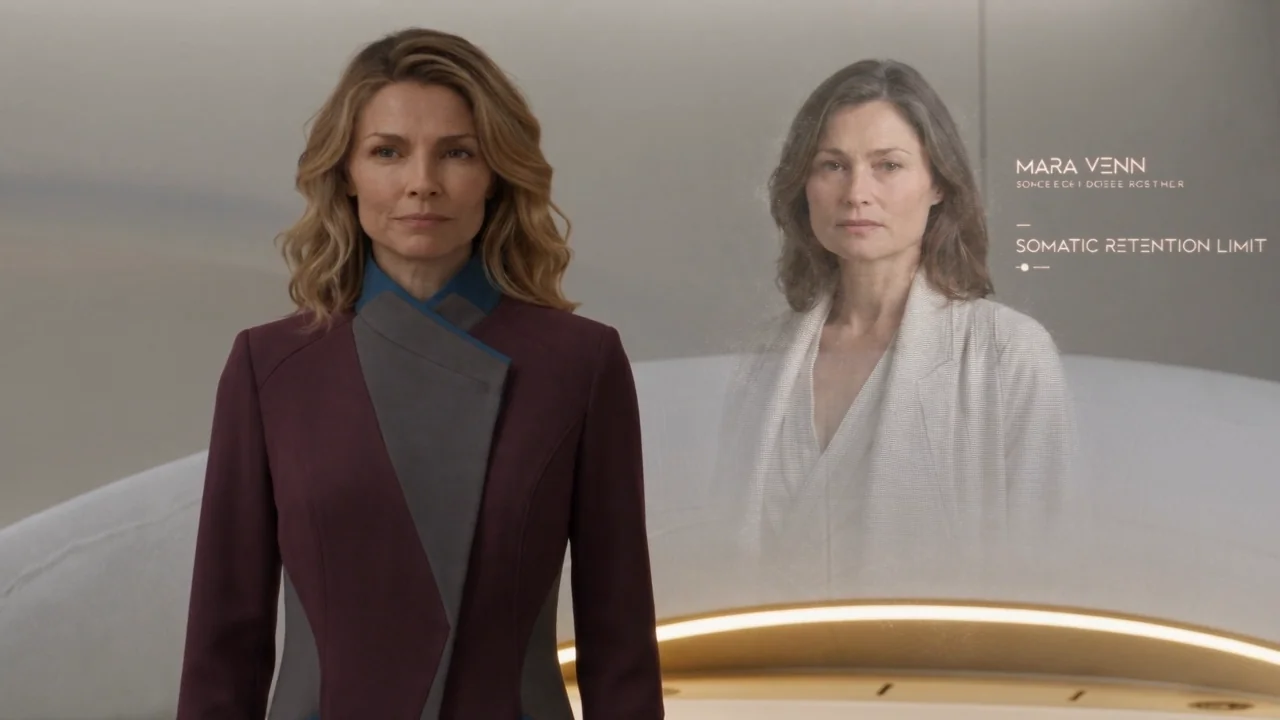
Over time, her scientific objections became a form of political dissent. She openly challenged the direction of a civilization that celebrated her discoveries while rejecting the implications of her thinking. Her ideas became associated with the dismissive label “Bioromanticism.”
The official account presents her permanent loss as the consequence of rejecting Persistence. The hidden history of Finality casts that account in a different light: Venn was an earlier victim of the state’s capacity to end a person irreversibly.
For Lennie, Venn represents both an intellectual inheritance and a warning. Her work suggests that another future was imaginable, and that its disappearance from public life was a political choice.
The end that should not exist.
The Finality Protocol, also referred to as the Ending Protocol, is a closely guarded state secret.
Citizens believe that the information sustaining their identities is protected by the state and that the destruction of a synthetic body can be followed by restoration at a Revision Center. What they do not know is that the state can permanently revoke that possibility.
Finality seals off restoration, purges the preserved data, and terminates the active individual. It turns what would ordinarily be a recoverable loss into an irreversible ending. The protocol is used extraordinarily rarely. Centuries have passed since the state last needed to invoke it, reaching back to Mara Venn.
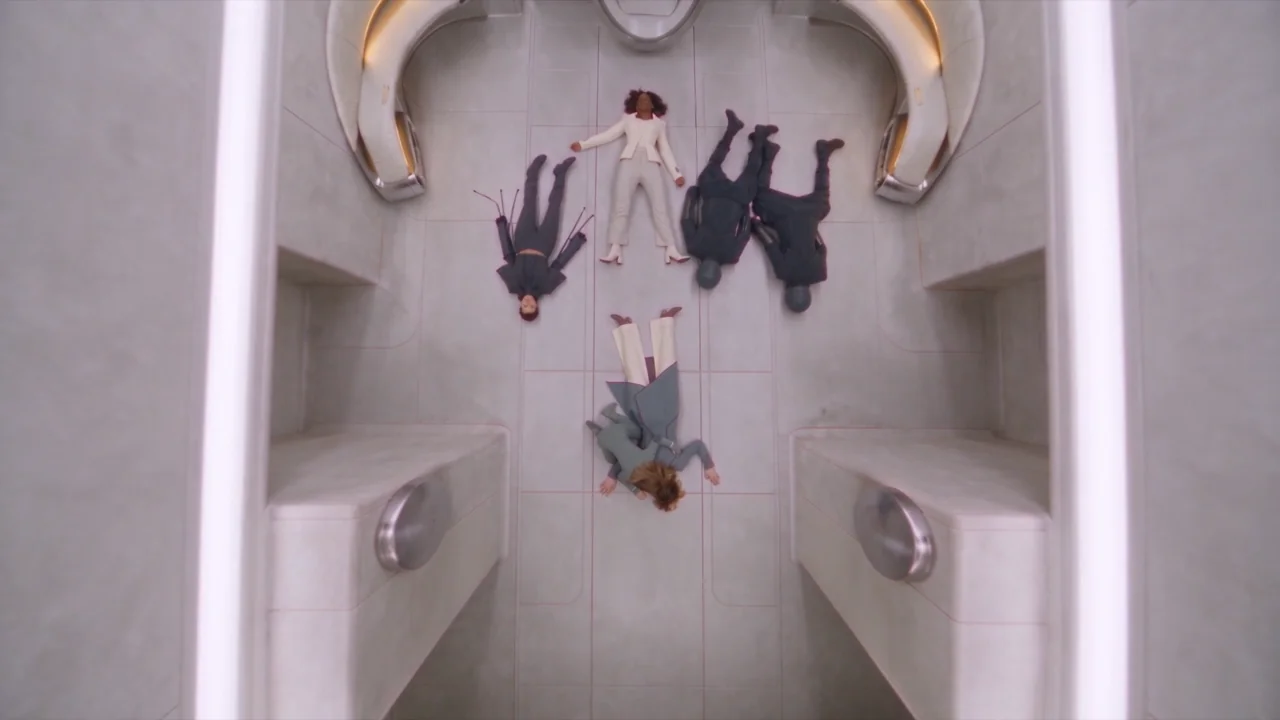
When Finality is invoked against Lennie, Simone’s attempt to restore her is denied. The distinction between destroying a body and ending a person becomes unmistakable. Eda, the Security Commander, understands what she has been made part of and moves to release Iris.
In Lennie’s final moments, Iris’s tear reaches her lips. Without an active Fidelity session, she recognizes its taste: “Salty…” Then: “I remember.” The moment returns the film to the possibility her research has pursued: an embodied experience that reaches beyond the system’s prescribed limits.
What they know.
The final terminations are an act of information containment. They do not follow a simple division between people who committed an offense and people who obeyed orders.
- Rei & Patrick
- They remain unaware of Finality itself. However, they know that a biological sample was collected and have encountered evidence that Iris’s identity cannot explain. Even without definitive knowledge that she is biological, they possess more information than the state is willing to leave in circulation.
- Simone
- She has helped enable the chain of events, learned the truth about Iris, and witnessed the reality of irreversible termination.
- Eda & the officers
- They know both what Iris is and that Finality exists. Carrying out the state’s orders does not protect them from becoming witnesses to a secret the state intends to erase.
- Noah
- Lennie has kept him outside the deepest layers of the operation. His knowledge concerns the unauthorized override, not Iris’s biological creation or Finality. His narrower exposure explains why his earlier bodily destruction is followed by restoration. The final order to find him makes clear that he is not beyond danger.
- Iris
- Her biological life does not depend on Persistence. The mechanism that remotely ends the synthetic people around her cannot shut her down in the same way. This does not make her physically invulnerable; it makes her existence independent of that particular system of control.
Survival became a system.
The civilization in FIDELITY inhabits a physical artificial world in space. The film’s setting is not revealed to be a simulation.
From a tower at the center of that constructed world, the Executioner issues two orders: “Bring the girl.” “Find her father.” The camera then moves into the vacuum beyond it.

What follows reveals the historical circumstances behind this civilization: a frozen Earth, the shattered Moon forming a ring around it, and a Sun enclosed within a Dyson sphere.
Humanity anticipated a catastrophic collapse and moved into digital consciousness and synthetic embodiment to survive it. The original transition answered a real existential threat.

Over time, a survival strategy became a permanent political order. Returning to biological life could be dismissed as unnecessary or inefficient, even when it remained technically possible. A population dependent on state-protected data, synthetic bodies, and authorized restoration is a population whose continued existence can be controlled.
Iris therefore exposes more than a scientific exception. Her existence reveals that the absence of biological humanity is no longer simply a question of what civilization can do. It is also a question of what those in power choose to allow.
“I do not distrust their motives; I distrust their power.”Philip K. Dick
To remain human.
FIDELITY is about memory, motherhood, mortality, and irreversibility.
Its synthetic citizens remain human in their love, grief, relationships, and sense of self. Iris’s existence reveals another form of human continuity, one in which experience becomes an inseparable part of a living body’s history.
Lennie’s love is sincere, but her choices carry consequences for people who did not fully understand or consent to them. The state’s survival project once answered a real existential threat, yet its authority has expanded into control over life itself.
The film asks what is preserved when a person can always be restored, what is lost when every bodily change can be reversed, and who has the right to decide between those possibilities.